


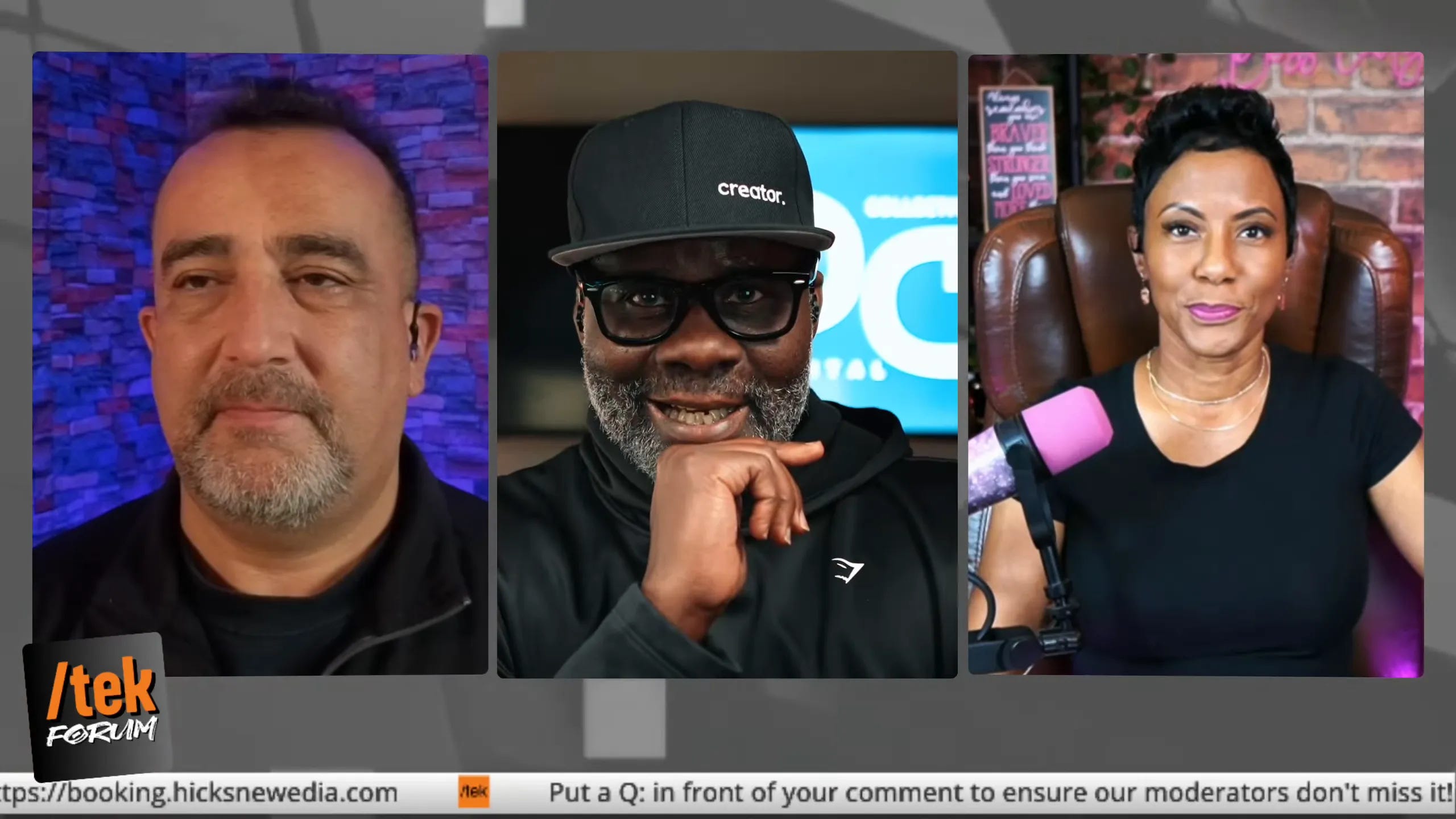
This week on the tek’na.le.gist FORUM, our host James Hicks led a conversation with Jim Fuhs and me about what happens when AI stops being a tech industry buzzword and starts showing up in your client’s Google searches, their inbox tools, and their expectations of you.
This isn’t theory. It’s happening now. And if you’re a coach, consultant, or creator, you need a strategy that goes beyond “I’ll figure it out later.”
Here’s What You Actually Need to Know
AI has left the building—and entered everyday workflows. Your clients are already encountering AI in search results, content tools, and customer service platforms. The question isn’t whether to engage with it, but how to do it without losing what makes you valuable.
Your judgment is still your superpower. AI works best as a thinking partner, not a replacement. The professionals winning right now? They’re using AI to handle the grunt work while they focus on the strategic, human-centered decisions only they can make.
Digital responsibility is your competitive advantage. Transparency about AI use, clear client policies, and teaching critical thinking skills will separate you from competitors who treat AI like magic or ignore it entirely.
Four Actions You Can Take This Week
1. Automate the repetitive, elevate the strategic
Use AI for research summaries, first drafts, and content formatting. Spend your brain power on what actually moves the needle for clients.
2. Build your prompt library
Create reproducible prompts that capture your voice and standards. This turns AI from a random output generator into a consistent workflow tool.
3. Package hybrid services
Offer “human expertise + AI efficiency” as a premium option—faster turnarounds, smarter onboarding, AI-assisted content packages that you still oversee and refine.
4. Teach implementation, not theory
Run live workshops where clients actually use AI tools with your guidance. Most people have subscriptions they never touch because they don’t know where to start.
The Tools Shaping the Landscape
You don’t need to master everything, but you should understand what’s possible:
AI-first search (Gemini, Perplexity Comet, Atlas) is changing how clients find and validate information
Creative tools (Sora2, image generators) speed up branding and visual iteration
Low-code builders let you create custom tools for clients without subscriptions
AI assistants and agent teams can automate entire client workflows
Emerging tech (wearables, AR, wellness AI) signals where the industry is heading
The Ethics Gap No One’s Talking About
Here’s the uncomfortable truth: access to AI tools doesn’t mean people know how to use them responsibly. That’s creating a new digital divide between those who can apply AI strategically and those drowning in subscriptions they don’t understand.
You can lead here. Update your client agreements to disclose AI use. Add clauses about voice, likeness, and data storage. Teach clients how to verify outputs and spot AI hallucinations. This isn’t extra work—it’s how you build authority while others are still guessing.
What I’m Doing Differently
I’m building two things into my service model:
Straightforward AI frameworks that save time without sacrificing quality or ethics—so my clients stay in control.
Live implementation workshops where clients build real solutions in real time, not another course that sits unwatched in their dashboard.
Want the Full Conversation?
We covered all of this—plus live tool demos and specific examples—in the tek’na.le.gist FORUM livestream session last night, hosted by my friend James Hicks. Be sure to follow him as well as Jim Fuhs for the latest in tech and video trends!
The most valuable thing you sell is your judgment. AI should amplify it, not replace it.
Keep experimenting,
Tanya


